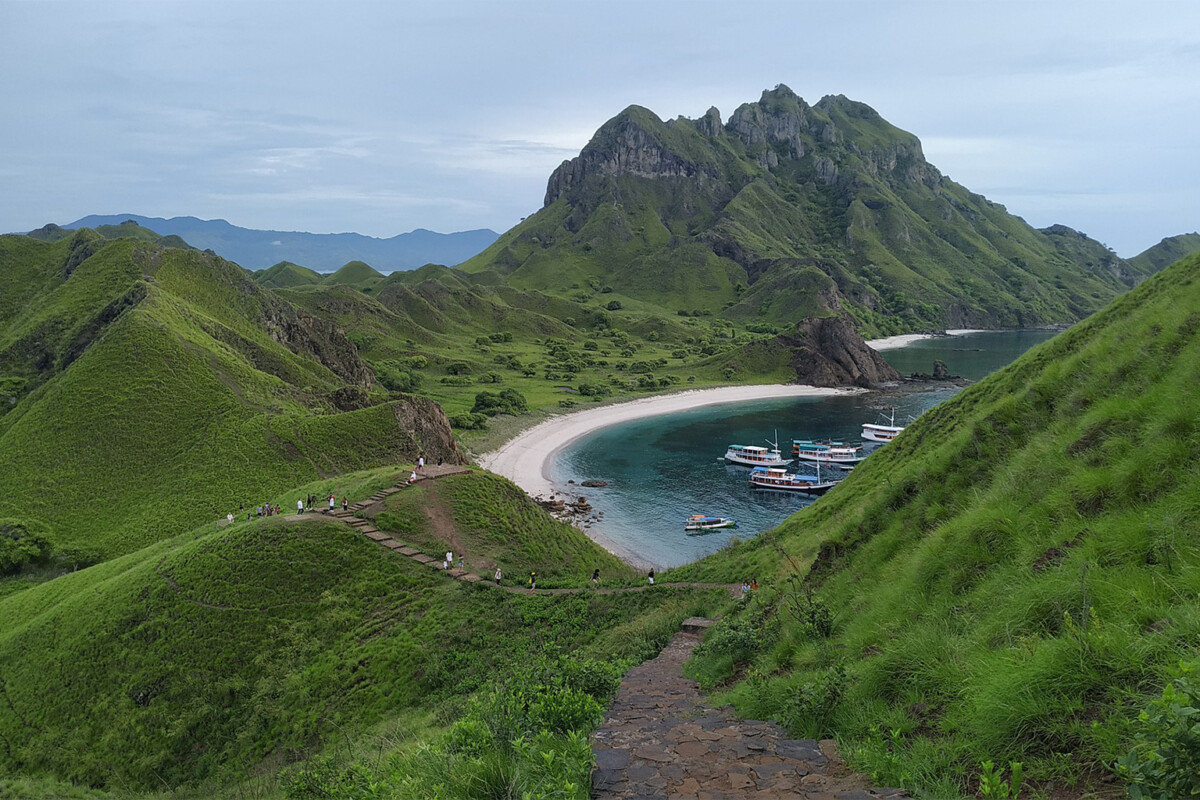
When planning a Komodo tour, travelers often imagine untouched islands, dramatic landscapes, and rare encounters with the legendary Komodo dragon. Yet behind this idyllic image lies a growing debate: should parts of Komodo and Padar Islands become exclusive destinations reserved for premium tourism, or should they remain open and accessible to all? This question strikes at the heart of how we define heritage, who owns it, and how it should be experienced.
The Rise of Exclusive Tourism in Komodo
In recent years, government initiatives and private investors have introduced a “super-premium” concept for Komodo National Park. The idea is to limit visitor numbers in certain zones, increase entry fees, and develop high-end facilities designed for affluent travellers. Advocates argue that this model ensures conservation by reducing the pressure of mass tourism on fragile ecosystems.
Supporters also claim that exclusivity attracts a different class of visitors, those willing to spend more per trip. Theoretically channeling higher revenue into conservation and local development. In theory, this would position the Komodo tour as a luxury brand comparable to the Galápagos or safari destinations in Africa.
The Case for Shared Heritage
On the other side of the debate are those who see Komodo National Park as a world heritage site belonging to everyone, not just the wealthy. Restricting access through expensive fees or gated developments risks alienating the very people. Local communities and average travelers—who have long celebrated Komodo’s natural wonders.
For many Indonesians, Komodo represents national pride, and making it exclusive could feel like privatizing a treasure that belongs to all citizens. From a global perspective, UNESCO’s World Heritage framework emphasizes that sites of “outstanding universal value” should be preserved for collective enjoyment, not commodified for a narrow audience.
Economic and Social Dimensions
The exclusive-access model also raises questions about who really benefits. High-end resorts and luxury marinas can generate significant profits. Still, if ownership rests with external investors, local communities may see little trickle-down effect. Fishermen, homestay owners, and small tour operators in Labuan Bajo rely on an inclusive flow of visitors to sustain their livelihoods.
If access is restricted, these groups may be overlooked in favour of large-scale businesses. This creates not only economic disparity but also a cultural imbalance. Where locals become employees in their own heritage landscape rather than active custodians and beneficiaries.
Conservation vs Commodification
Proponents of exclusivity highlight conservation as their primary justification: fewer visitors mean less waste, less reef damage, and reduced strain on ecosystems. While this is a valid concern, critics argue that conservation should not be synonymous with commercialization.
Conservation can be achieved through stricter visitor guidelines, carrying capacity limits, and sustainable practices without making Komodo prohibitively expensive. For example, implementing timed entry tickets, mandatory guides, and eco-certification for boats can reduce impact while keeping the Komodo tour inclusive.
Philosophical Perspectives on Heritage Ownership
At its core, this debate touches on a philosophical question: who owns heritage? Suppose natural wonders like Komodo dragons are the product of millions of years of evolution. Do governments and investors have the right to restrict access based on wealth? Or should they be seen as a shared human inheritance, managed responsibly but inclusively?
This dilemma is not unique to Komodo. Similar debates arise at Machu Picchu, the Great Barrier Reef, and national parks worldwide. The balance between preservation and accessibility requires careful thought, transparency, and community involvement.
Toward a Middle Ground
A possible compromise lies in a hybrid model. Certain fragile areas could adopt stricter regulations with higher fees to limit impact. At the same time, other zones remain accessible at affordable rates. This ensures that conservation goals are met without excluding those who are unable to afford luxury prices.
Furthermore, involving local communities in decision-making ensures that policies reflect the needs of those who live closest to Komodo. When locals become stakeholders through co-managed tourism, training, and business opportunities, they have more substantial incentives to protect their heritage.
The Komodo tour is more than a holiday; it represents the intersection of nature, culture, and global heritage. Whether Komodo becomes an exclusive playground for the wealthy or remains a shared treasure depends on the choices policymakers, businesses, and travelers make today.
Exclusivity may generate prestige, but shared heritage fosters a sense of belonging. The future of Komodo National Park should not be defined solely by economic gain but by its ability to inspire and unite people across cultures and generations.